

Seca XLine Stretch
Measurement
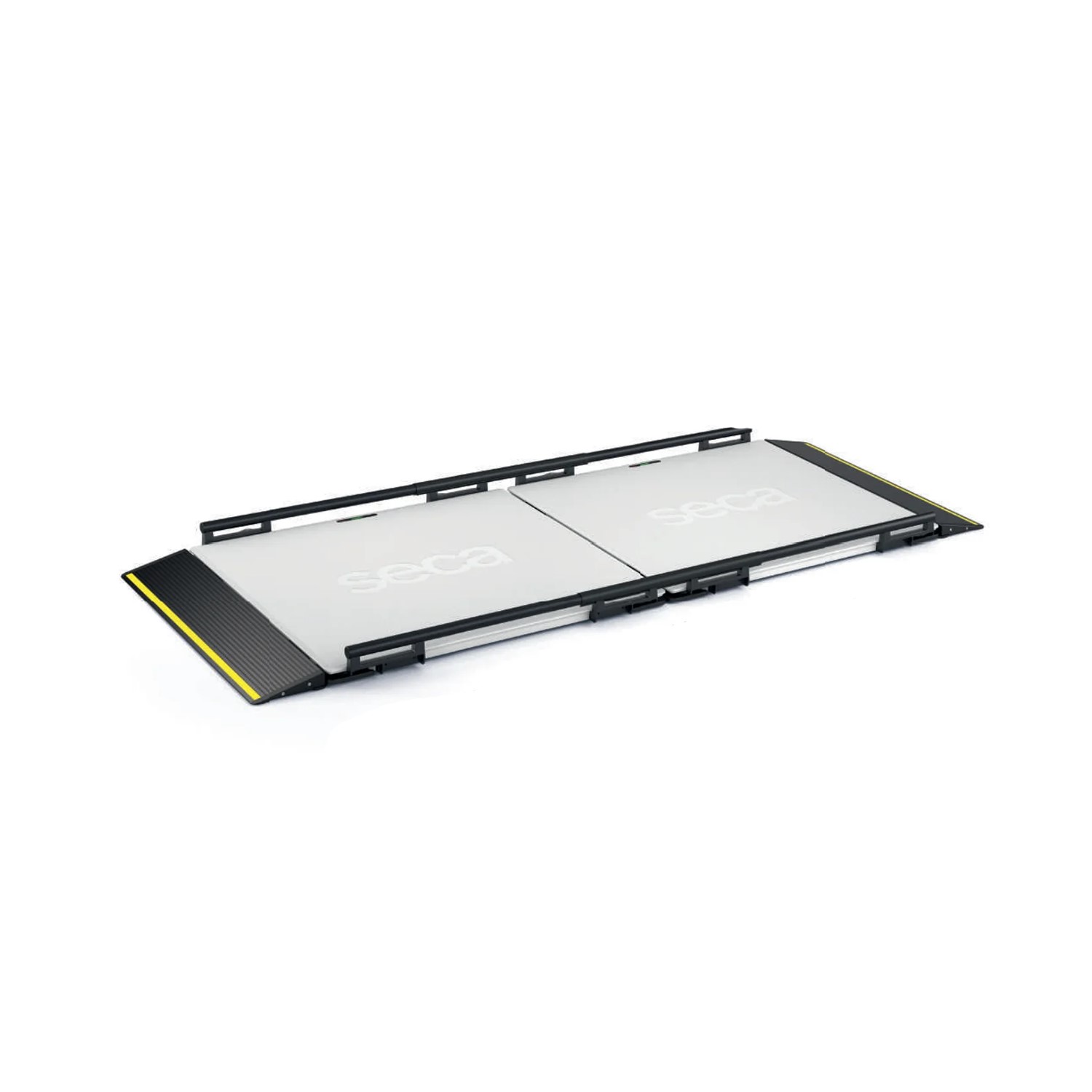
Experience a new era of efficient, EMR-validated, and patient-centric weighing with the seca XLine Stretch. Featuring generous dimensions, an ultra-low profile, and guardrails, this solution ensures the safe and effortless movement of gurneys, stretchers, and beds onto the platform. The Tare-by-Scanning function simplifies the process by zeroing out pre-stored weights through barcode scanning. Seamlessly integrating into treatment workflows during dialysis, emergencies, or whenever weighing bedridden patients is necessary, the seca XLine Stretch is a versatile and indispensable tool for modern healthcare.
- XXL dimensions to accommodate hospital beds, stretchers and gurneys with ease
- Built to withstand the highest loads with a capacity of 1,000 kg
- Weigh patients quickly and safely during emergency admissions or dialysis
- Eliminate the need for estimating the weight of bedridden patients, weigh them comfortable and precise
- Tare-by-Scanning: simplify the weighing process by taring out the weight of the stretcher or bed by scanning its barcode
- Extra low profile ensures a smooth and safe transition for pushing beds and stretchers onto the platform
- After identification with a barcode scanner the ID-Display shows patient’s ID, user ID and DOB
- EMR-validated, enabling seamless data transmission directly to an Electronic Medical Record (EMR) system or to a printer
About Company
Today the ambitious young metalworker A.C.C. Joachims would have been an apprentice with distinction.
His employer was the monk and mechanic Alois Quintenz who had already invented the decimal scale in Strasbourg in 1821. The clever apprentice acquired the necessary knowledge from him and brought it to Hamburg. There Joachims founded Germany's first scale factory on July 11th, 1840. He primarily produced weigh bridges, decimal scales, Roberval balances, and column scales that he sold all over the world. A small factory developed out of the metalwork shop whose luster faded when Joachims died in 1874.
The mechanical engineer Frederik Vogel bought the scale factory in 1888, expanded the product range, and introduced the brand name "seca" which he had copyrighted in 1897. The name is derived from the Latin word "secare" meaning "to cut." Why? Because one cut plays an important role in the measuring accuracy of a mechanical scale.
At the start of the industrialization Frederik Vogel moved the company from Königstraße in the Altona district to the Hammer Steindamm in Wandsbek in 1904.
The headquarters of seca is still located there today. Just about every doctor was already familiar with and using the mechanical scales with the red logo in the first half of the 20th century because they are considered especially durable thanks to their high quality
seca had already survived World War I and the Great Depression as Frederik Vogel passed the management of seca on to his son Robert.
The new CEO carried the company through the difficult time of World War II and started with the reconstruction immediately afterward. His skill paid off, because seca quickly became famous for its groundbreaking developments.
Sönke Vogel succeeded his father as the head of the company after his death.
He expanded the market leadership of seca with a new strategic orientation. His concept was to concentrate on medical measuring and weighing with top precision. "When it comes to weighing, use seca scales!" Delivery vans with large advertisements drove through the city presenting and selling the new products, always very close to the customer.


